Annual essentials estimate
Estimated annual total: $960
Transparent pet buying guides
Transparent comparisons, apartment-aware filters, and starter checklists for dog and cat owners.
Editorial, criteria-first, and not a substitute for veterinary advice.
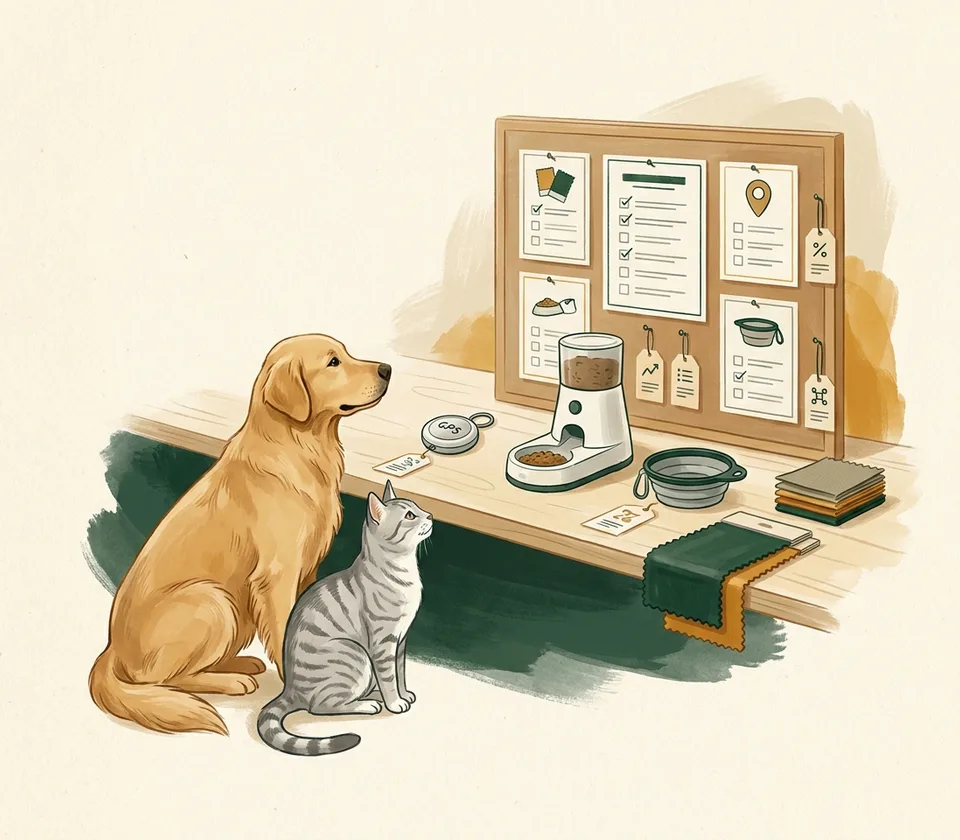
Choose a pet, home type, and priority to reach a focused shortlist with the tradeoffs that matter.
Use these planning estimates as a starting point, then confirm local prices and your pet's needs.
Estimated annual total: $960
Estimated annual litter cost: $432
These are the first content clusters because they match high-intent searches and practical setup moments.
A starter path for crates, beds, food storage, cleaning, training, and first-week routines.
View pathCompare odor control, footprint, tracking, refill cost, and disposal routines for small homes.
View pathUnderstand battery life, subscriptions, coverage, waterproofing, and escape-risk use cases.
View pathShortlist carriers, bowls, cleanup kits, and paperwork routines for lower-stress travel.
View pathSmall, honest shortlists of products you can actually buy today — each with a clear role, real specs, and the tradeoffs we would want to know first.
How to read these: prices are approximate (USD) and were reviewed on July 7, 2026 — confirm the current price before buying. Links point to official brand pages and are editorial, not paid affiliate links. See our disclosure policy.
The sticker price barely matters — the subscription does. We score on three-year total cost, battery life, fit, and escape-risk features.
~$50 device + plan from ~$5–13/mo
A lower estimated three-year cost than Fi using the listed plan prices, with worldwide cellular coverage where supported.
~$99 device + $99/yr
An integrated collar that cannot fall off, with the longest standby battery in the category. Costs more over time, but hard to beat for determined escapers.
~$99 device + $8.99/mo
Its listed 18 g weight makes it a compact option when tracker weight is the deciding constraint for a toy breed or cat.
For one or two cats, value wins. For three-plus or large cats, sealed-drawer odor control and capacity earn the premium.
~$699 (add $100 for a 3-year warranty)
A sealed waste drawer and per-cat weight tracking make it a strong fit for multi-cat homes or small spaces where odor control matters.
~$369–549 (often on sale)
A significantly cheaper unit with a strong PETKIT app and per-cat tracking. The right pick when you have one or two cats and do not need sealed-drawer odor control.
A scheduling problem, a food-stealing problem, and a portion-accuracy problem need different machines. Pick by the job, not the spec sheet.
~$70–90 (camera model +$20)
The default choice for scheduled dry feeding: a big 5-litre hopper, reliable portions, and an optional camera for peace of mind at a fair price.
~$150–170
A targeted option for cross-feeding: it reads a registered microchip or collar tag and opens for that pet, while supporting wet or dry food.
~$80
Gram-level portioning in a small footprint — ideal for cats and small dogs on a tight-space, tight-diet routine.
Almost any carrier can be airline-compliant. The real differences are crash safety, dual car-and-plane use, and how it fits under a seat.
~$190
The manufacturer cites a 5-star Center for Pet Safety rating, and the carrier compresses from 22 inches to 16 inches for under-seat fit.
~$50–70
The reliably compliant budget choice, backed by a "Guaranteed On Board" refund program if you are denied boarding after pre-approval.
~$150
Airline-legal and genuinely good in the car: seat-belt clips and a buckle strap secure it, and it ships with a pad/bed. One carrier for both trips.
PawWise Picks earns trust before clicks. Every comparison shows how products are scored, when the information was reviewed, and where commercial links appear.
Source governance: Pet-health, safety, pricing, subscription, and jurisdiction-specific claims cite official or primary sources, show a review date, and avoid guaranteed outcomes.
Current review date: July 7, 2026. Readership: US, UK, and EU pet owners.
We do not make veterinary diagnosis or treatment claims. Product guides can support owner decisions, but medical questions belong with a qualified veterinarian.
Products score higher when they fit pet size, home constraints, and owner routine, not because they are popular.
Each recommendation calls out maintenance, recurring cost, noise, footprint, and replacement friction.
We avoid diagnosis or treatment claims. Veterinary questions are flagged as vet conversations, not buying advice.
Affiliate relationships are disclosed before monetized links, and comparison criteria stay visible.

Use the free checklist to plan first-week essentials, recurring supplies, space constraints, and questions to ask before buying.
Download the free checklistNo email address is required or stored. Read the privacy notice for the current data-handling policy.
No. The site focuses on buying decisions, setup planning, and product tradeoffs. Health, diagnosis, treatment, and diet concerns should be handled with a qualified veterinarian.
We publish the scoring criteria first, then shortlist two or three products that are actually sold today. Each pick gets a role (best value, best for escape artists, best budget), real specs, and an honest list of tradeoffs. We prefer a small, defensible shortlist over a long undifferentiated list.
The verdicts are editorial assessments by Stefan Junk based on the dated manufacturer sources linked on every product card. Current content is not reviewed by a veterinarian or another subject-matter expert, and we do not publish fabricated customer testimonials. Outbound links are not currently paid affiliate links; if that changes, the disclosure will remain beside each recommendation.
Prices are approximate, in USD, and stamped with a review date. Pet-tech prices and subscriptions change often, so always confirm the current price on the retailer page before buying. We re-verify each comparison roughly every quarter.
A direct checklist helps owners plan before buying and leads into the relevant comparison pages without requiring an account or email address.
The first step is context. Pet type, space, budget, travel, and recurring maintenance shape the guide path before product suggestions appear.


